
Craft · Hong Kong
The First Cut in Hong Kong’s Mahjong Workshops
A retiring carver gave Karen Cheung his tools. Her father had learnt the trade from his own father. Together, they set out to teach what he knew.

Karen Cheung went to Tsuen Wan hoping to buy a retiring carver’s tools. When he recognised her grandfather’s name, he gave them to her. As Cheung recalled in a 2022 interview, her grandfather’s Fuk Hing Lung Mahjong Factory had closed in 2009. The family had thrown away its tools and machinery. The gift gave her and her father a set of carving tools again.1
Learning a set, one mark at a time
At the factory in Kowloon City, Karen’s father and grandfather carved, her uncle ground the tiles, and she sometimes helped colour and pack them. Her father, Ricky Cheung, began apprenticing under his own father at thirteen and went on to run the factory. Karen became an illustrator, working under the name Karen Aruba. When she began drawing the tools she remembered from childhood, it was part of a longer effort to document how the tiles were made. She persuaded Ricky to take up carving again and work with her.2
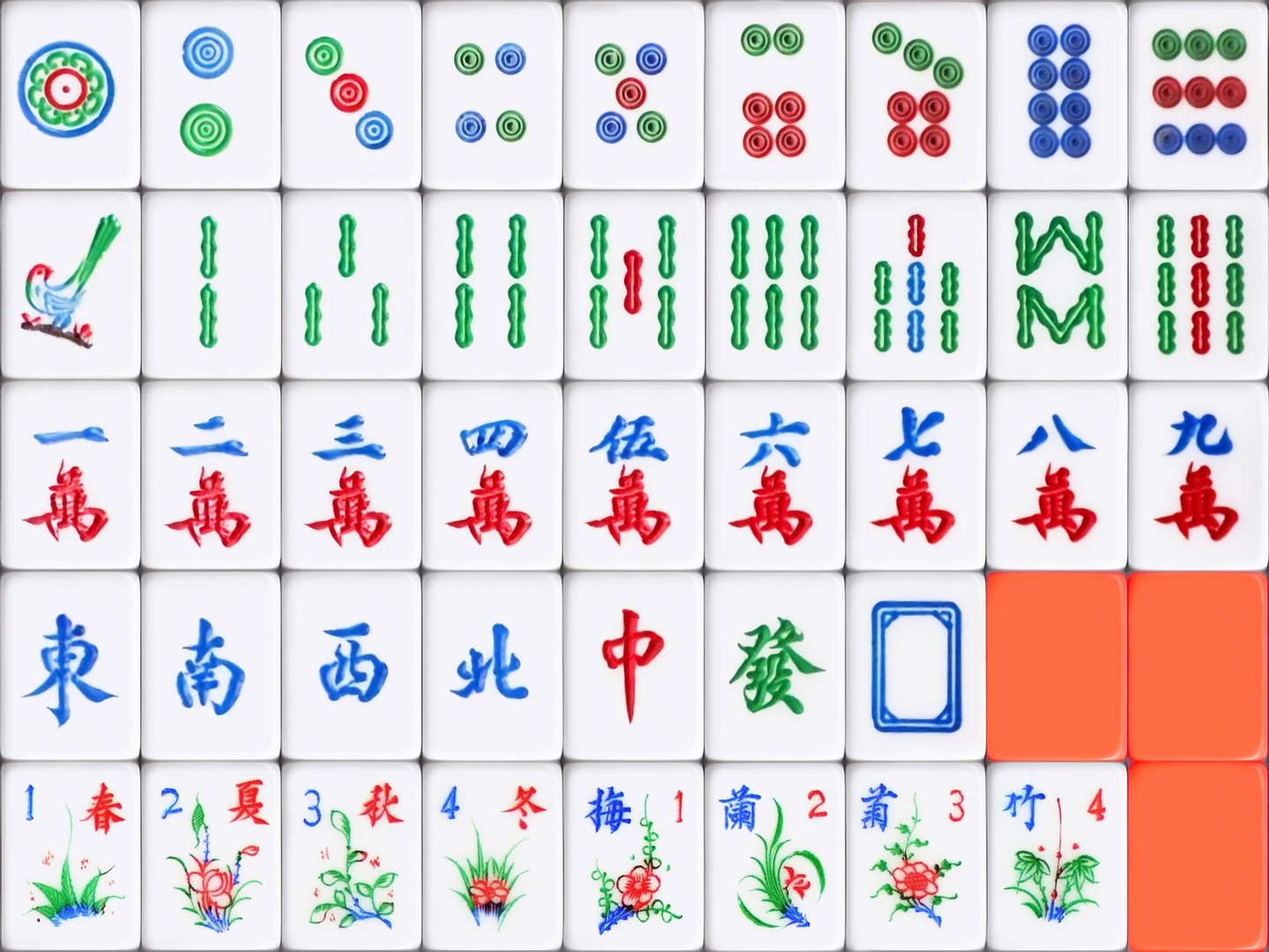
Hong Kong’s heritage inventory describes four stages in making a tile. The pieces are cut, polished, carved and coloured. It records wood, ivory and bamboo among the older materials and describes their replacement by plastic. At Kung Yau Cheung Mahjong, a separate family business on Shanghai Street, the tools varied with the design. In Hong Kong News Network’s account of the shop, a heated metal plate softened the face of the plastic tile. Carvers drew the Bamboo suit’s lines with a specialised scraper and made the circles with a drill stand and a compass. Once the paint in the grooves had dried, they scraped away the excess.3
The owner, Ko Yun-kan, said apprentices began with circles and bamboo lines, then learnt to cut lettering. The Character suit and the more elaborate flower designs came later. Learning to handle the knife alone, he recalled, could take three months. Ko had entered the trade at eighteen. By the time his shop closed on 28 March 2026, he said much of the remaining handwork was restoring or repairing tiles. The landlord was taking back the premises. Another shop trading under the same name, run separately by relatives on Lai Chi Kok Road, was still open when the closure was reported.4
A knife for each learner
The carver Cheung Shun-king ran a different family shop, Biu Kee Mahjong. In 2019, Associated Press reporters watched him carve Chinese characters into an acrylic tile. He held the knife in his right hand and turned the tile with his left, pausing to blow away the shavings. At a workshop reported in the same article, he began by showing learners how to sit and hold the knife, then went round the room to guide them individually.5
Shun-king ground his own knives from steel bars. When workshop organiser Eldage needed more than ten for a class, making that many by hand would have been difficult for him alone. Materials researcher Pakman Yiu spent several months testing designs with the carver before producing a batch Shun-king was satisfied with. Eldage records that the class went ahead.6
What a first lesson can teach
At Wu Yee Sun College on 20 November 2024, Karen introduced students to the history of her family’s factory. The college’s report says a demonstrator it names as Master Cheung showed how to colour, carve and drill the tiles. Students then had the opportunity to try carving and drilling under supervision and to colour tiles themselves. Karen also led a heritage-funded project that produced fifteen short teaching videos and a digital picture book for young people and the wider public.7
The studio’s 2026 workshop listing names Ricky and Karen as instructors and describes what a first carving exercise involves. Learners would practise basic strokes on a tile the studio calls 十八, or “eighteen”, then try introductory designs including circles and the white dragon. The studio says it modified the tile material for beginners and developed tools specifically for teaching.8
For 28 June 2026, the Intangible Cultural Heritage Office listed Ricky and Karen for two one-hour sessions at TKO Plaza in Tseung Kwan O. Later that year, tile making was one of eight crafts featured in Living Craftsmanship, which opened at CLP Pulse in Kowloon on 6 October.9
At Shun-king’s workshop in 2019, a primary-school teacher named Adrian O’Sullivan told the AP what he had learnt from making a few strokes himself. It gave him an idea of the skill a good cut required. Shun-king touched up the students’ tiles so they could take them home.10
For Karen, there was the further question of what to offer someone who wanted to come back. In the interview in which she described the gift from the retiring carver, she spoke of a learner prepared to spend two or three years at the work. She wanted that person to have tools and lessons suited to what they were ready to do next.11
Sources & image credit
-
Karen Cheung’s account of the gift
Back to passage ↑ -
The family workshop and Ricky Cheung’s training
Back to passage ↑ -
Materials, tools and methods
- Hong Kong Intangible Cultural Heritage Inventory, item 5.61
- Hong Kong News Network on the Shanghai Street workshop
-
Ko Yun-kan and the Shanghai Street closure
Back to passage ↑ -
Cheung Shun-king’s carving technique
Back to passage ↑ -
Developing knives for the class
Back to passage ↑ -
The college class and teaching project
- Wu Yee Sun College’s workshop report
- Intangible Cultural Heritage Office report on the completed project
-
The studio’s beginner exercises
Back to passage ↑ -
The June programme and October exhibition
Back to passage ↑ -
Adrian O’Sullivan’s workshop account
Back to passage ↑ -
Karen Cheung on longer training
Back to passage ↑
Tile-face photograph
Mahjong eg HK carving by Cangjie6 via Wikimedia Commons, CC BY-SA 4.0. The existing Journal image was resized and converted to WebP. Shown here in a cropped frame. The photographer identifies the carving style. The pictured set’s maker and workshop are undocumented. View the full photograph